.svg)


National Day is not only a day to remember a historical event. It is a chance to understand how the Maldives reached this point, what earlier generations experienced, and what that history means for society today.
 Features Desk
By Nazeem Noushad
Opinion & Features
At the heart of that history is the story of Bodu Thakurufaanu.
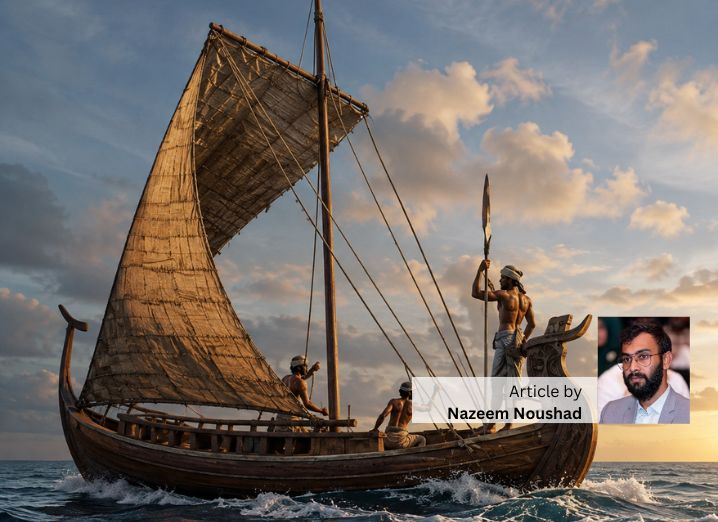
In the 16th century, the Maldives came under Portuguese occupation. Portuguese influence in the Indian Ocean was expanding, and the Maldives, positioned along important maritime routes, became part of a wider struggle for control and influence.
For the people of the Maldives, Portuguese rule was not simply a change of political authority. It affected the country’s sovereignty, religion, culture and way of life.
Bodu Thakurufaanu became the leading figure in the resistance against Portuguese rule. According to Maldivian historical tradition, he and his supporters organised resistance from the northern islands and carried out attacks against the Portuguese presence.
The struggle continued for years.
In 1573, the Portuguese were defeated and their control of the Maldives came to an end. Bodu Thakurufaanu then became Sultan, beginning a period that would become one of the most remembered chapters in Maldivian history.
His name has remained familiar across generations. For many families, his story was first learned not from a history book but through parents, teachers and stories passed down over time.
That is why National Day continues to carry meaning beyond an official ceremony.
History is often presented through the names of rulers and major events. But behind those events were ordinary people.
The resistance against Portuguese rule was not simply the story of one man. It was also connected to the people who supported the struggle, protected their communities and continued their lives during a difficult period.
That part of history matters today.
A country is not built only by its leaders. It is built by ordinary people: families raising children, teachers educating students, workers supporting communities, fishermen going to sea, businesses creating opportunities and young people deciding what kind of country they want to inherit.
The Maldives has changed dramatically since the 16th century. Yet society still faces a basic question that every generation must answer: what kind of country do we want to leave behind?
The threats facing the Maldives today are very different from those of the Portuguese period.
National security is no longer only about foreign forces arriving by sea. Economic dependence, environmental pressures, misinformation, cyber threats, political division and weaknesses in public institutions can also affect a country’s ability to protect its interests.
This is why sovereignty should not be understood only as independence from foreign rule.
It also means having the strength to make responsible decisions, protect national interests and build a society capable of standing on its own feet.
At the same time, being sovereign does not mean being isolated.
The Maldives has always been connected to the wider Indian Ocean world. Trade, travel and relations with other countries have been part of its history for centuries. The challenge today is to maintain those relationships while ensuring that national interests remain at the centre of decision-making.
For society, National Day should therefore be more than a celebration.
It should be a moment for reflection.
Young people should know why Bodu Thakurufaanu is remembered. But knowing his name is not enough. Understanding why his struggle became important is more valuable.
The lesson is not that the past was perfect or that every historical account should be accepted without question.
The lesson is that a nation’s identity is built over generations.
Language, religion, culture, traditions and the ability to determine our own future are all part of that identity.
They survive when people value them.
Every generation receives something from those who came before.
The generation that lived through the Portuguese period could not have imagined the Maldives of today. They could not have imagined airports, modern cities, tourism, smartphones or a country connected instantly to the rest of the world.
But they faced their own challenges and made choices that shaped the future.
Today’s generation faces a different set of responsibilities.
We must build a society where disagreement does not become hatred, where political differences do not destroy national unity, and where development does not come at the expense of our identity or future.
National unity does not mean everyone thinking alike. It means remembering that, despite our differences, we share a country and a common future.
That responsibility belongs not only to politicians or public institutions. It belongs to society.
Bodu Thakurufaanu is remembered because his story represents courage and resistance at a critical moment in Maldivian history.
But the value of remembering history is not simply to look backwards.
It is to understand what earlier generations faced and consider what we are doing with the opportunities they left behind.
National Day should remind us that the Maldives was shaped by people who lived through uncertainty, defended what they believed mattered and passed their country to the next generation.
Now it is our turn.
The strongest way to honour the past is not simply to celebrate it once a year. It is to build a society worthy of what earlier generations struggled to protect.
That means stronger communities, responsible citizenship, respect for one another, protection of national identity and a clear sense of responsibility for the future.
National Day is therefore both a remembrance and a question.
We know what earlier generations did for the country.
What will our generation do for the Maldives?
Opinion Note: The views expressed are those of the author and do not necessarily reflect the views of R24 News. Publication does not imply endorsement.