.svg)


India’s Union Cabinet has approved a five-year extension of its national social assistance programme, introducing wider disability pension eligibility and revised benefits expected to reach 3.2 crore people.
 Mariyam Adheela
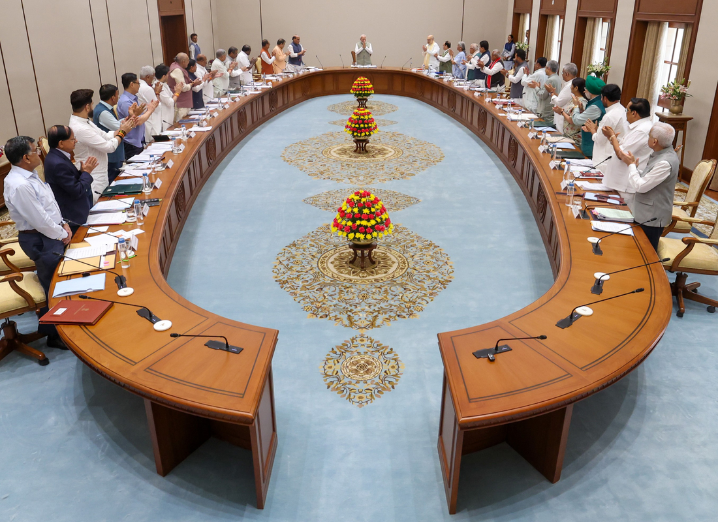
India’s Union Cabinet -- Photo: Pmindia
New Delhi, India — India’s Union Cabinet has approved ₹53,428 crore to continue the National Social Assistance Programme (NSAP) for five years, from 2026–27 to 2030–31, expanding access to disability pensions while maintaining existing support for elderly people, widows and eligible families.
Under the revised rules, the minimum disability threshold for pension eligibility will be reduced from 80 per cent to 40 per cent. The minimum age requirement will also be removed, allowing eligible persons with disabilities to receive assistance from birth.
Monthly assistance under the disability pension scheme will be ₹375 for beneficiaries aged up to 79 and ₹625 for those aged 80 and above.
The programme will be renamed the Pradhan Mantri Samajik Sahayata Yojana. Its component schemes, covering old-age pensions, widow pensions, disability assistance and family benefits, will also receive new names.
The existing old-age and widow pension schemes and the National Family Benefit Scheme will otherwise continue in their current form.
The government estimates that approximately 3.2 crore people across India’s 36 states and union territories will benefit from the programme’s continuation.
The Department of Rural Development is expected to issue revised implementation guidelines within three months, detailing eligibility requirements, beneficiary coverage and assistance rates.
Launched on 15 August 1995, the National Social Assistance Programme provides financial assistance to vulnerable households, including elderly people, widows, persons with disabilities and families facing hardship following the death of a primary breadwinner.
The programme is fully funded by the central government and forms part of India’s social protection framework for economically vulnerable citizens.