.svg)


Tesla CEO Elon Musk has unveiled a new version of the company's long-awaited Roadster sports car, demonstrating technology that allows the vehicle to briefly take flight, perform aerial manoeuvres and accelerate from zero to 60 miles per hour in less than one second.
 News Desk
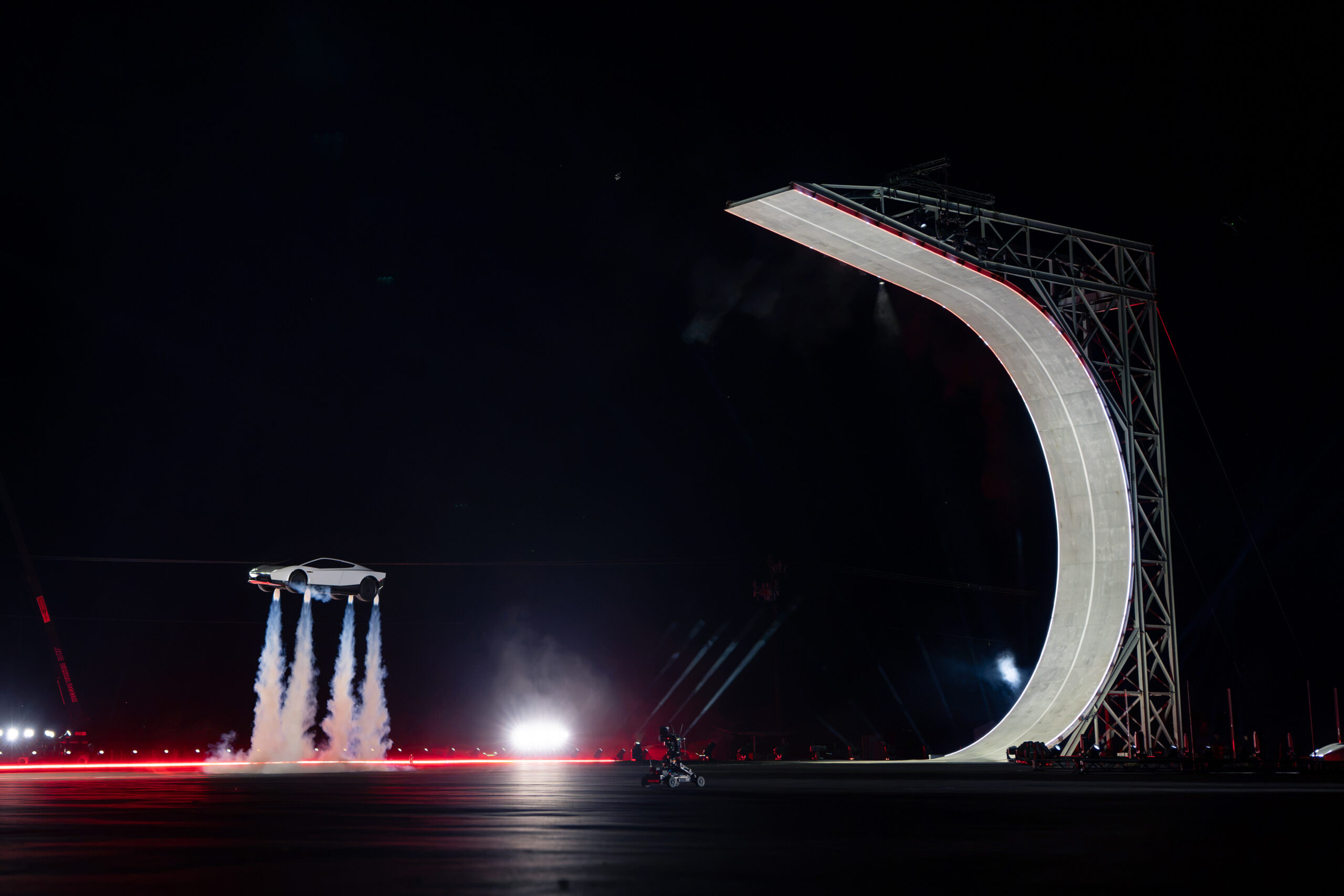
Photo: Courtesy of Tesla, Inc.
The futuristic electric sports car was presented on Thursday, October 15, at a SpaceX testing facility in Texas, where Musk showcased what he described as a major breakthrough in automotive engineering.
During the demonstration, the Roadster climbed a steep, curved ramp using a powerful suction system installed underneath the vehicle. The system allowed the car to remain attached to the surface while travelling upside down before launching into the air, performing a flip and landing safely using compressed-air thrusters.
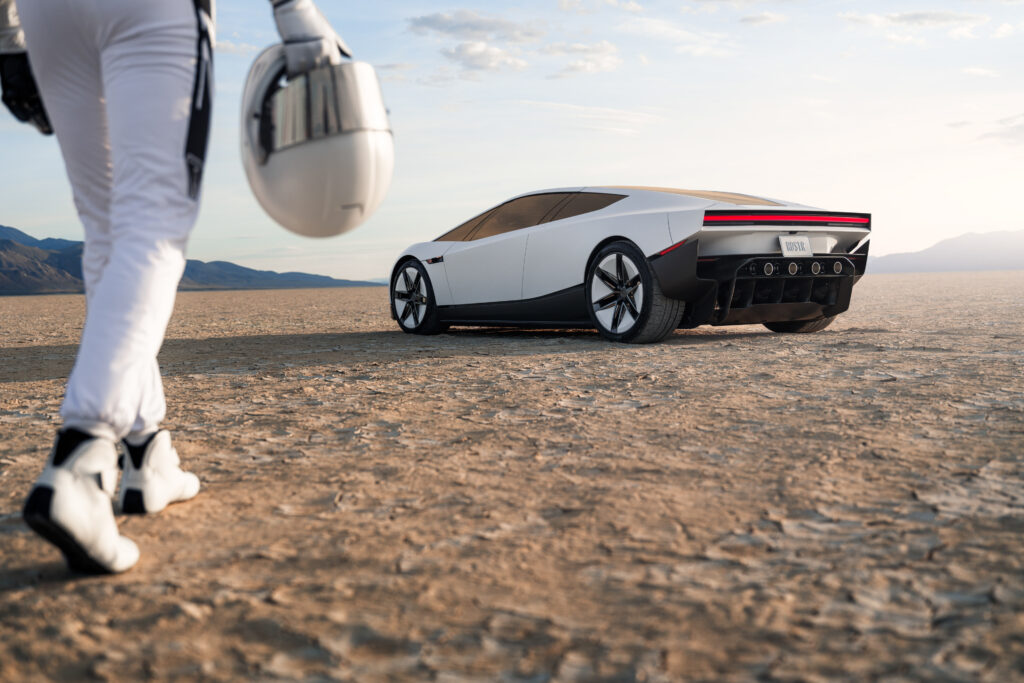
The demonstration was conducted without a driver as a safety precaution.
The vehicle later used its thrusters to jump over several parked Tesla models before demonstrating its acceleration capabilities.
According to Tesla, the Roadster can accelerate from zero to 60 mph (97 km/h) in approximately 0.8 seconds, potentially making it one of the fastest-accelerating cars ever developed.
The vehicle combines electric propulsion with technology developed in collaboration with SpaceX, Musk’s aerospace company.
Its advanced propulsion system uses high-pressure compressed air released through multiple nozzles to generate thrust, allowing the vehicle to perform short airborne manoeuvres.
Tesla engineers said the Roadster also features a powerful fan-based suction system designed to improve traction and stability, particularly during high-speed driving.
Despite the successful demonstration, questions remain about whether the vehicle will be capable of sustained flight or whether its airborne capabilities will be limited to short jumps and controlled manoeuvres.
Tesla has not independently demonstrated that the Roadster can operate as a conventional flying vehicle capable of transporting passengers through the air over significant distances.
The company has also yet to establish whether the technology can meet the safety and regulatory requirements necessary for widespread commercial use.
Musk acknowledged the uncertainty surrounding the demonstration, warning spectators that success was not guaranteed.
The Roadster was originally announced in 2017, with production initially expected several years earlier. However, the project has experienced repeated delays as Tesla focused on expanding its electric vehicle business and developing autonomous driving technology.
Musk now says production is expected to begin in 2028, although the company has not demonstrated that it can manufacture the vehicle at commercial scale with all its advertised capabilities.
Tesla has introduced three planned Roadster variants, including a high-performance version and a more advanced model designed to use additional thrusters for airborne manoeuvres.
While the demonstration marks a significant development in the Roadster project, the vehicle remains a prototype, and its promised performance has not been independently verified under standard testing conditions.
The unveiling has renewed interest in the possibility of flying cars, a concept explored for decades by automotive and aerospace engineers.
However, whether Tesla’s latest Roadster represents a practical step towards airborne personal transportation or remains an experimental high-performance sports car will depend on further testing, safety approvals and the company’s ability to deliver the technology to customers.