.svg)


The International Monetary Fund has raised its global economic growth forecast for 2026 to 3.1%, citing strong investment in artificial intelligence, while warning that conflict and rising debt continue to threaten the outlook.
 Mariyam Adheela
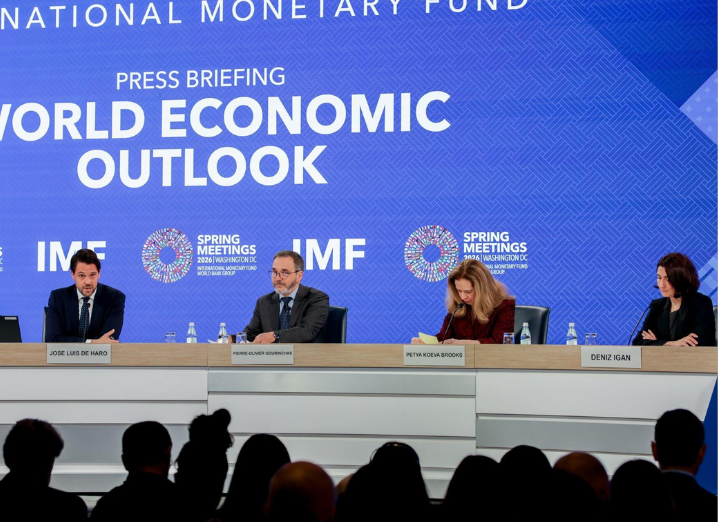
IMF officials present the latest global economic outlook in Washington, warning that the oil crisis could slow global growth and increase recession risks -- Photo: Samuel Corum/Bloomberg
Washington: The International Monetary Fund (IMF) has increased its forecast for global economic growth in 2026 to 3.1%, up from the 3% projected in July, as investment in artificial intelligence helps offset the impact of higher energy prices and conflict in the Middle East.
The IMF released its latest World Economic Outlook on Tuesday as finance leaders gathered in Bangkok for the annual meetings of the IMF and World Bank. The fund expects the global economy to grow by 3.4% in 2027, unchanged from its previous forecast.
The IMF said strong investment in artificial intelligence infrastructure has helped support economic activity, particularly in countries developing AI technology and supplying related equipment.
However, the global outlook remains uneven, with some countries benefiting more than others. The fund warned that many developing economies continue to face pressure from higher energy costs and rising debt.
The prolonged conflict in the Middle East has pushed oil prices above $100 a barrel, increasing concerns about inflation and the cost of living. The IMF warned that a further escalation could disrupt energy supplies and slow economic growth.
The fund also cautioned that governments have less room to respond to future crises as debt levels rise and emergency energy reserves decline.
The IMF expects global inflation to rise to 4.7% in 2026, compared with 4.1% in 2025, largely because of higher energy prices. Inflation is projected to ease to 4.1% in 2027.
The fund warned that prolonged high oil prices, rising borrowing costs and uncertainty over returns from AI investment could weaken the global economy further. It urged governments to strengthen their finances and improve their ability to withstand future economic shocks.