.svg)


North Korea has rejected an IAEA resolution calling for an end to its nuclear activities, insisting its nuclear status is irreversible.
 Mariyam Adheela
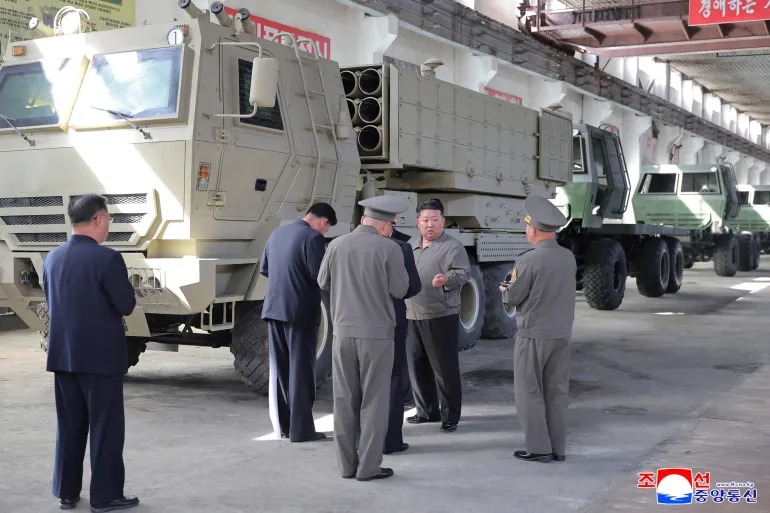
North Korean leader Kim Jong Un provides guidance on projects in the defence industry sector, in a picture released by the country's official Korean Central News Agency on September 19, 2026 -- Photo: Reuters
The resolution was adopted at the IAEA’s 70th General Conference in Vienna on Thursday, with 103 countries voting in favour, six against and 14 abstaining. It reaffirmed that North Korea cannot be recognised as a nuclear weapons state under the Nuclear Non-Proliferation Treaty (NPT) and called on Pyongyang to immediately halt nuclear-related activities.
A North Korean Foreign Ministry spokesperson said the resolution was prepared by “hostile forces” and would not affect the country’s position.
The ministry said North Korea’s nuclear status was guaranteed by its nuclear deterrent and permanently established under the country’s supreme law.
Kim Yo-jong, the sister of leader Kim Jong-un, also accused the IAEA of applying double standards. She criticised the agency for what she described as ignoring nuclear-related activities involving the United States and South Korea while targeting North Korea.
The IAEA has expressed growing concern over activity at North Korean nuclear facilities, including the Yongbyon complex and the Kangson uranium enrichment site.
The agency has been unable to conduct inspections inside North Korea since its inspectors were expelled in 2009 and has relied largely on satellite imagery and other publicly available information to monitor the country’s nuclear programme.
North Korea withdrew from the NPT in 2003 and has continued to reject international calls for denuclearisation, maintaining that its nuclear capabilities are necessary for national security.