.svg)


More than 74,000 Palestinians have been killed and 175,000 injured since October 2023, as ongoing attacks, displacement, food shortages and inadequate shelter continue to devastate Gaza.
 Mariyam Adheela
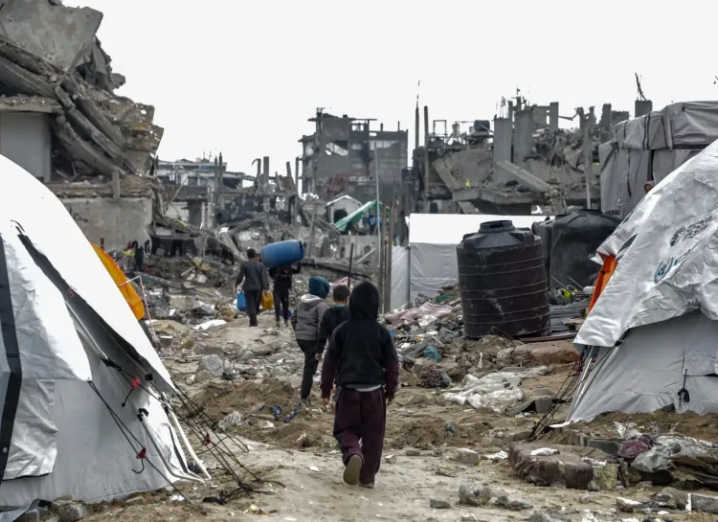
Children walk past tents in Jabalia camp in the Gaza Strip -- Photo: UNICEF
GAZA, Palestine: At least 74,498 Palestinians have been killed and 175,616 injured since Israel launched its military campaign in the Gaza Strip on October 7, 2023, according to figures released by Gaza health authorities on October 22.
The latest figures were reported by the Palestinian news agency WAFA. They include 1,538 Palestinians killed and 5,498 injured since the ceasefire took effect in October 2025. Authorities also reported that 841 bodies had been recovered from beneath the rubble during the ceasefire period.
The toll continues to rise despite the ceasefire, with Israeli airstrikes and gunfire reported across Gaza. On October 22, at least four Palestinians were killed in separate incidents in Gaza City, Khan Younis, Nuseirat and Jabalia, according to local health officials cited by Reuters.
For survivors, the humanitarian crisis remains severe. The United Nations Office for the Coordination of Humanitarian Affairs (OCHA) reported on October 15 that approximately 950,000 displaced people were living in sites at medium to high risk of flooding, including more than 400,000 facing high risk.
Many families remain in tents and makeshift shelters, while damaged buildings pose additional dangers. According to the UN, available supplies could provide only partial assistance to around 18 per cent of the 294,250 families requiring shelter support ahead of the rainy season.
Food insecurity also remains widespread. Humanitarian partners reduced daily cooked-meal production to approximately 614,000 meals in early October, a decline of about 12 per cent from late September, amid funding shortages. Monthly food parcels and flour distributions were estimated to cover only around half of a household’s minimum caloric needs.
Gaza’s healthcare system continues to face shortages of essential medicines, fuel and equipment. The UN has warned that these shortages threaten services for patients requiring dialysis, cancer treatment and ongoing care for chronic illnesses.
Water and sanitation services are also under strain. OCHA reported declining drinking-water production in early October because of infrastructure disruptions, electricity problems and shortages of spare parts. Poor sanitation and overcrowded living conditions have contributed to the continued spread of respiratory and skin infections and acute watery diarrhoea.
Thousands of patients still need specialised treatment unavailable in Gaza. The World Health Organization has continued facilitating medical evacuations, but access to treatment outside the territory remains limited compared with the scale of medical need.
Children and other vulnerable groups face additional risks from repeated displacement, inadequate shelter and disrupted education. Humanitarian agencies have reported growing protection concerns, including child labour, family separation and psychological distress.
Women-headed households are also facing heightened hardship, with limited access to safe shelter, essential supplies and support services. Funding shortages have forced some protection services and safe spaces to close or reduce their operations.
As winter approaches, aid agencies are warning that flooding, cold weather and further damage to already fragile infrastructure could worsen conditions for displaced families. Continued violence and restrictions affecting the entry of essential supplies are further complicating relief operations.
Although the ceasefire has changed the scale and pattern of fighting, the latest reports indicate that it has not brought an end to civilian deaths or the humanitarian emergency. Many Palestinians remain displaced and dependent on aid, while the scale of destruction continues to obstruct recovery.