.svg)


Former President Mohamed Nasheed has warned that increasing resorts’ mandatory dollar sales to 40 percent could weaken investment confidence and threaten long-term tourism stability.
 Mariyam Adheela
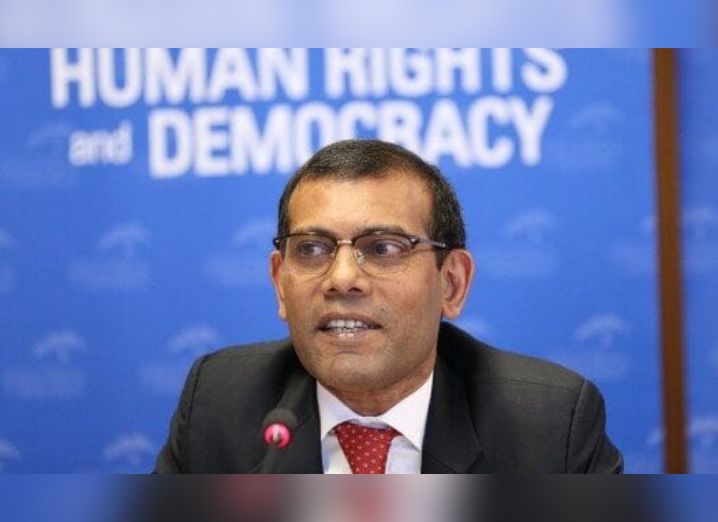
Former President Mohamed Nasheed
MALÉ – MALDIVES: Former President Mohamed Nasheed has criticized a proposed increase in the share of resort dollar earnings required to be sold to local banks, warning that raising the rate from 20 to 40 percent could negatively affect investors and the tourism industry.
Nasheed made the remarks in a post on X on Monday, following the announcement by Maldives Monetary Authority (MMA) Governor Ahmed Munawwar that amendments to the Foreign Currency Act are being prepared.
The proposed amendment would require resorts to sell 40 percent of their US dollar earnings to local banks, compared with the existing 20 percent requirement.
Nasheed said the proposed policy could produce undesirable economic consequences, particularly because many resorts have significant dollar-denominated debts.
He noted that a substantial portion of the Maldivian tourism industry has also been financed through bank loans and foreign investment.
According to Nasheed, foreign investors have been attracted to the Maldives because of the competitive returns available in the tourism sector.
He warned that reducing the confidence of these investors could create risks for the long-term development and stability of the industry.
“Requiring resorts to sell 40 percent of their US dollar earnings to the MMA is a policy that could produce major undesirable economic consequences,” Nasheed said.
MMA Governor Munawwar announced the proposed changes during a meeting with journalists at the President’s Office on Monday, attended by three government ministers.
Munawwar said the government plans to amend the Foreign Currency Act to increase the mandatory dollar surrender requirement from 20 percent to 40 percent.
The proposed amendments would also change the frequency of the required transactions, with resorts expected to sell the required dollar earnings every month instead of once every three months.
The amendments are expected to be submitted to the People’s Majlis for consideration.
Munawwar also said recent pressure on the dollar market was partly temporary and linked to the conflict involving Iran.
He said there was no clear reason for the dollar exchange rate to rise to its current level and suggested that speculation or certain parties setting exchange rates was contributing to the situation.
The Maldives Association of Tourism Industry (MATI) has also expressed concern over the proposed changes.