.svg)


Police carried out more than 1,140 drug-related operations across the Maldives this year, seizing large quantities of illegal substances and making nearly 1,900 arrests.
 Mariyam Adheela
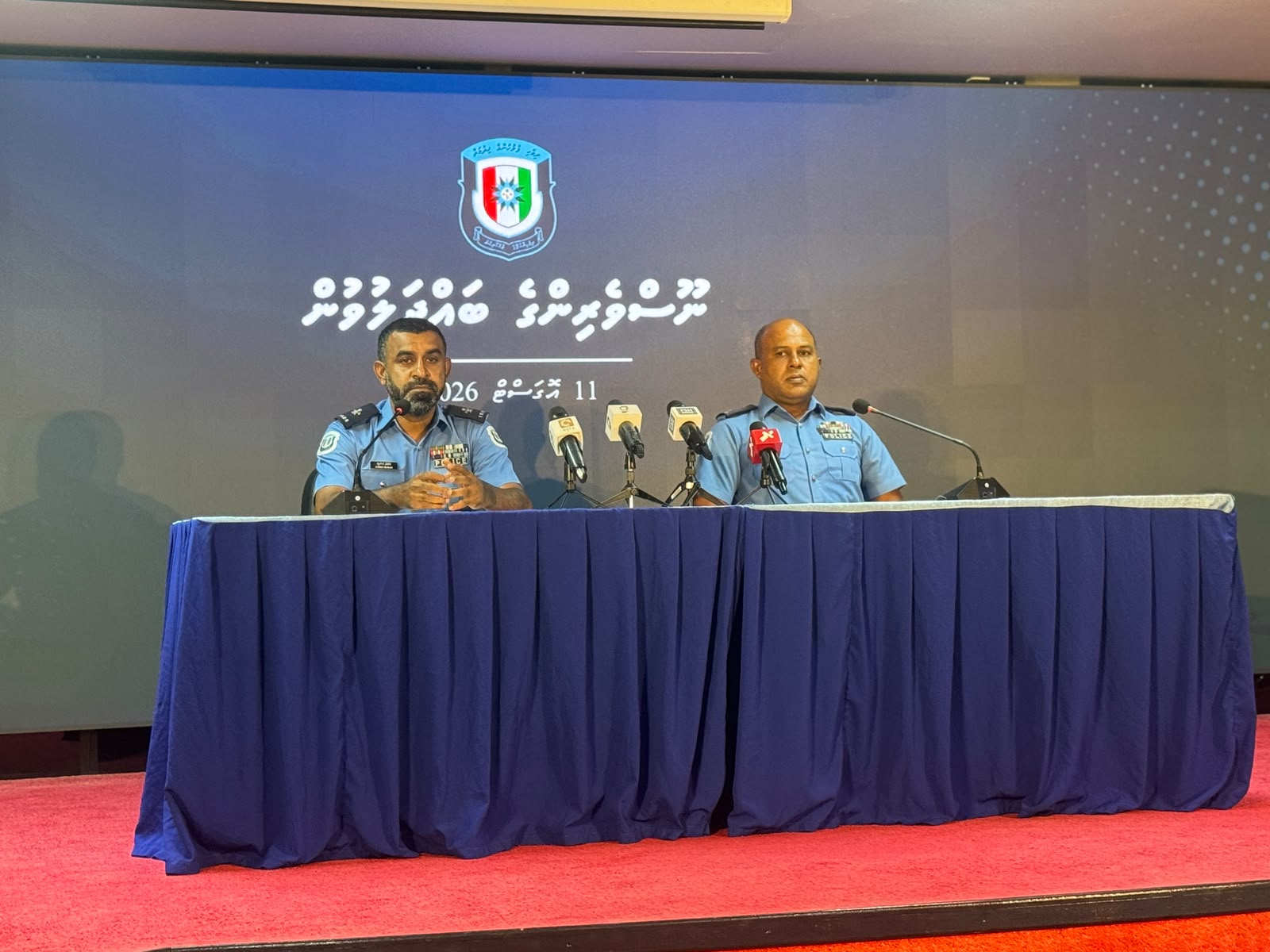
Police officials at today’s press conference on drug enforcement operations -- Photo: Nazeem Noushad / R24
MALÉ: Police have seized more than 144 kilograms of drugs and arrested 1,875 people in drug-related operations conducted across the Maldives during the first seven months of the year.
The figures were released at a press conference held by the police today, where officials outlined the results of nationwide efforts to tackle drug-related offences.
Head of Drug Enforcement Superintendent of Police Ahmed Muslim said police carried out more than 1,140 anti-drug operations during the period.
More than 530 operations were conducted in the Greater Malé area, while 281 took place in the Southern Police region and 329 in the Northern Police region.
Police also stopped and searched 23,249 people at different locations as part of the operations.
Of the 1,875 people arrested, more than 760 were detained in the Greater Malé area, over 530 in the Southern Police region and more than 570 in the Northern region.
Police searched more than 7,300 locations suspected of being linked to drug use or distribution. Most of these searches, 6,779, were carried out in the Malé area.
The largest amount of drugs was seized in Malé, where police confiscated more than 137.8 kilograms. More than three kilograms were seized in the Southern region and over 3.4 kilograms in the Northern region.
Police also confiscated 1,856 bottles of alcohol during the operations.
Police investigated 1,533 drug-related cases during the period. Of these, 560 were recorded in Malé, 505 in the Southern region and 468 in the Northern region.
In Malé, investigations into 343 of the 560 cases have been completed and sent to the Prosecutor General’s Office for further legal action.
Police are continuing drug enforcement operations across the country, with investigations and prosecutions progressing on cases already identified.