.svg)


A locally marketed biochar product is opening a new avenue for agricultural innovation while demonstrating how waste materials can be transformed into commercially valuable resources.
 News Desk
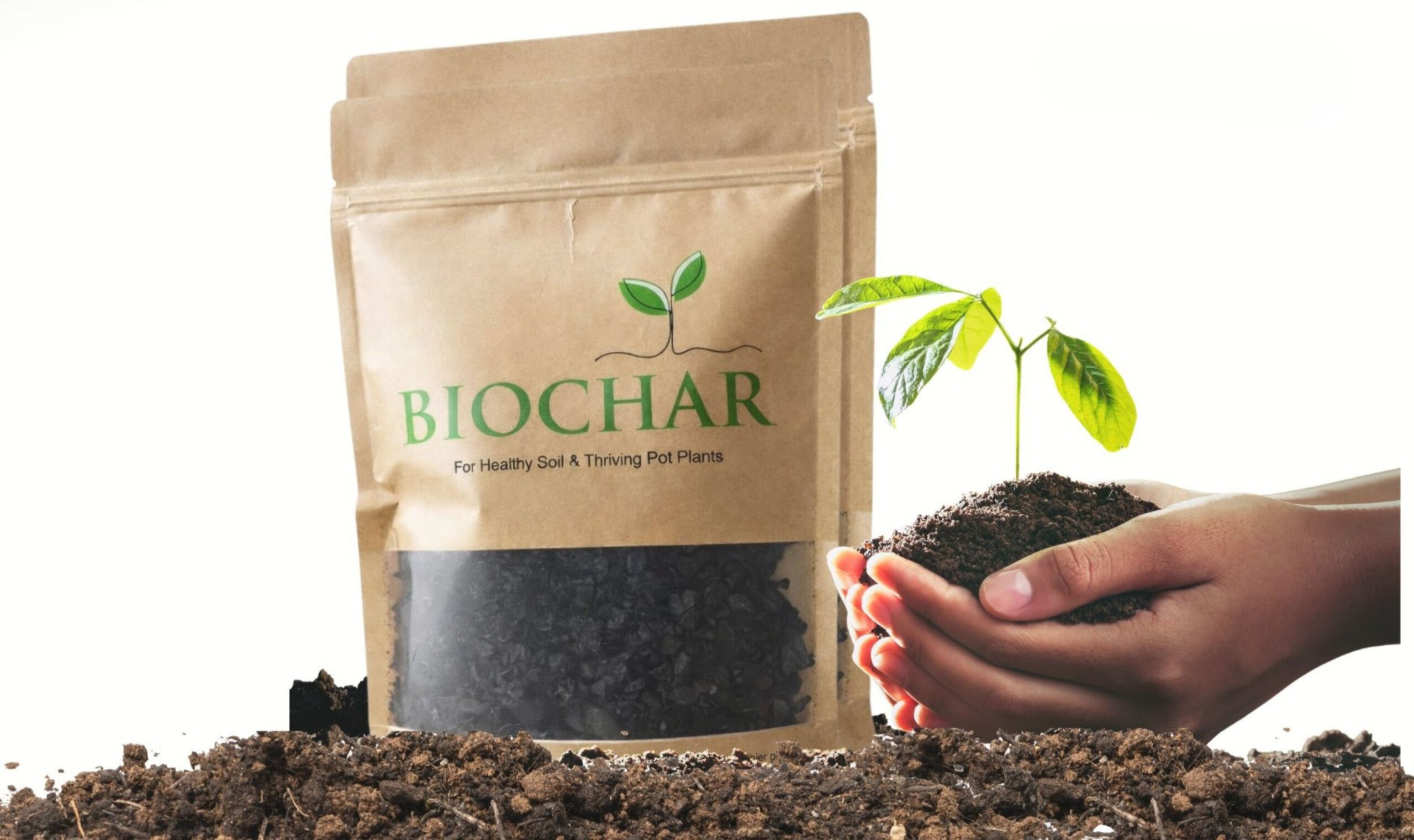
Malé: A Maldivian business is introducing biochar as a commercial agricultural product, bringing a soil-management technology increasingly associated with sustainable agriculture into the local market.
Through its Reuse Trade business, TENOGO Biochar is being marketed as an agricultural input for planting, offering Maldivian growers an alternative approach to improving soil conditions while creating a new market around the conversion of organic materials into useful products.
The development comes at a time when the Maldives is placing greater emphasis on local agriculture, food production, environmental sustainability and more efficient use of resources.
𝐓𝐄𝐍𝐎𝐆𝐎 𝐂𝐇𝐀𝐑𝐆𝐄𝐃 𝐁𝐈𝐎𝐂𝐇𝐀𝐑 🌿
For Orders
☎ 761-8866
📍 Reuse Trade – Shop No 5, Orchid Magu#tenogo #chargedbiochar #madeinmaldives pic.twitter.com/C9RzSCPM88— REUSE TRADE (@ReUse_Trade) March 27, 2026
Biochar is a carbon-rich material produced by heating biomass under controlled conditions with limited oxygen, a process known as pyrolysis.
Unlike conventional burning, the process converts organic material into a stable carbon-rich product that can be incorporated into soil.
Research has found that biochar can, depending on the type of material used and the conditions in which it is applied, improve soil water-holding capacity and nutrient-use efficiency. The potential benefits have attracted growing international interest in biochar as part of sustainable soil management and climate-resilient agriculture.
For the Maldives, the concept has particular relevance.
Agricultural production across the islands faces challenges including limited land availability, sandy soils, water constraints and the cost of transporting agricultural inputs between islands.
A locally available product that can support soil improvement therefore has potential significance beyond being another product on the agricultural market.
The significance of Reuse Trade’s initiative also lies in the business model behind the product.
The Maldives produces organic material through landscaping, agriculture, gardening and other activities. Much of this material is generally treated as waste or has limited economic value.
Biochar offers a different proposition: organic material can become a raw material for a commercially valuable agricultural product.
This reflects the principles of a circular economy, in which resources are kept in productive use for longer and waste streams are converted into inputs for other economic activities.
For Maldivian businesses, the model could point towards opportunities in areas such as biomass collection, waste processing, agricultural inputs, soil improvement and resource recovery.
The concept is particularly relevant for an economy where many products and agricultural inputs are imported.
Biochar is not entirely new to the Maldives. The technology has previously been explored through environmental and agricultural initiatives.
What is significant about the current development is the move toward commercial availability and wider consumer use.
Rather than remaining primarily a research or demonstration concept, biochar is being positioned as a product that can be purchased and used by growers.
This could create opportunities for its application in home gardens, nurseries, island farms, community agricultural projects and commercial cultivation.
However, agricultural experts caution that biochar should not be treated as a universal replacement for fertilizer or other soil inputs. Its effectiveness depends on the characteristics of the biochar, the soil, the crop and the method and quantity of application.
Local trials and agricultural guidance will therefore be important in establishing the most effective ways to use the product under Maldivian conditions.
The emergence of biochar as a commercial product also highlights a broader opportunity for Maldivian entrepreneurs.
For decades, the country’s economic model has been strongly associated with tourism, fisheries and trade. Developing businesses that create value from local resources and waste streams could provide another avenue for diversification.
The opportunity is not necessarily limited to biochar.
The same approach could be applied to other materials currently regarded as waste, creating new businesses around recycling, resource recovery, renewable materials and locally produced agricultural inputs.
In this sense, Reuse Trade’s biochar initiative represents an example of a broader shift in how businesses can approach environmental challenges—not simply as costs to be managed, but as opportunities to create new products and markets.
The development also comes amid growing attention to agricultural production and tree planting in the Maldives.
The Government’s 5 Million Trees Project, for example, aims to expand tree planting and contribute to environmental and climate-related objectives.
Agricultural products that can potentially improve soil and plant-growing conditions could complement such initiatives, particularly if their application is supported by scientific testing and practical guidance for island growers.
The next stage for biochar in the Maldives may therefore depend on more than simply selling the product.
Demonstrating its effectiveness through local trials, educating farmers and gardeners on appropriate application, and building partnerships with island councils, agricultural experts and other stakeholders could determine whether biochar develops into a wider agricultural input.
The introduction of commercially available biochar illustrates a broader possibility for the Maldivian business landscape: local companies do not necessarily have to compete only by importing and reselling products.
They can also identify environmental and economic challenges, adapt existing technologies and create products designed around the country’s specific circumstances.
For agriculture, that could mean better use of available resources.
For businesses, it could mean new markets.
And for the environment, it could mean finding productive uses for materials that would otherwise be discarded.
Biochar may still be a relatively small market in the Maldives. But the business idea behind it is considerably larger- turning locally available resources into new economic value while supporting the development of more sustainable agriculture.