.svg)


Scientists have used artificial intelligence to create 16 new viruses in a world-first breakthrough. The viruses are bacteriophages designed to attack bacteria like E. coli and could help develop new treatments for antibiotic-resistant infections. Experts, however, have warned about the need for strict safety measures to prevent misuse of the technology.
 Mariyam Adheela
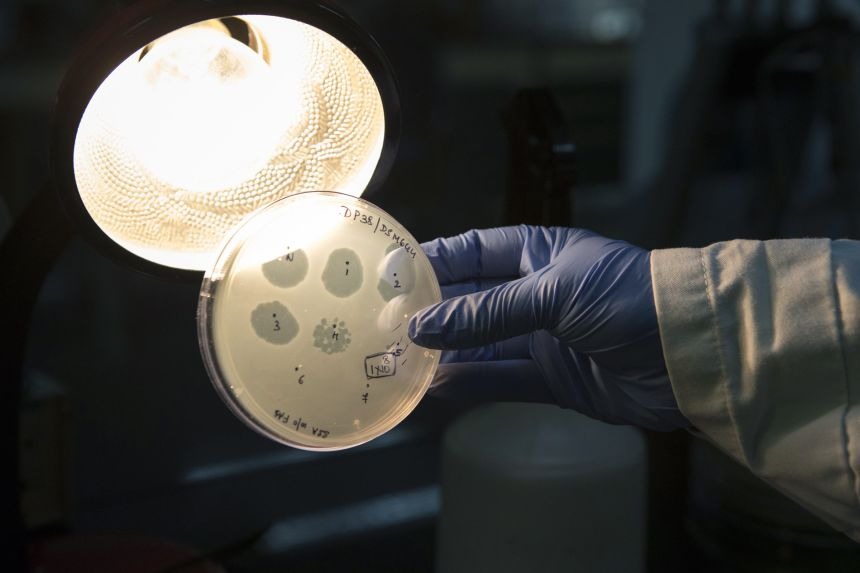
Of the thousands of genomes that the AI generated, scientists built and tested about 300 in the lab and found that 16 were viable viruses. Samyukta Lakshmi/Bloomberg/Getty Images/File
Scientists have used artificial intelligence (AI) to create 16 new viruses that do not exist in nature, marking the first time AI has successfully designed complete, functional viral genomes from scratch. The breakthrough could help develop new treatments for antibiotic-resistant infections, but it has also raised concerns over biosafety and the potential misuse of the technology.
The research, led by scientists at Stanford University and the Arc Institute, focused on creating bacteriophages: viruses that infect bacteria rather than humans, animals or plants. The AI-generated viruses were designed to target and destroy Escherichia coli (E. coli), including antibiotic-resistant strains. Out of hundreds of AI-designed genomes, researchers successfully produced 16 functional viruses in the laboratory.
Researchers say the technology could accelerate the development of phage therapy, a promising alternative to antibiotics for treating drug-resistant bacterial infections.
However, experts have warned that the same technology could one day be misused to create harmful pathogens if proper safeguards are not in place. In a commentary accompanying the study, biosecurity experts called for stronger oversight of AI-powered biotechnology and DNA synthesis to reduce potential risks.
The researchers stressed that the AI models used in the study were trained only on viruses that infect bacteria, and the newly created viruses are not capable of infecting humans. They said the work was carried out under strict laboratory safety measures