.svg)


The Bangladesh Bank has submitted three proposals, including a currency swap arrangement, to the Maldives Monetary Authority (MMA) to ease remittance transfers for Bangladeshi workers.
 News Desk
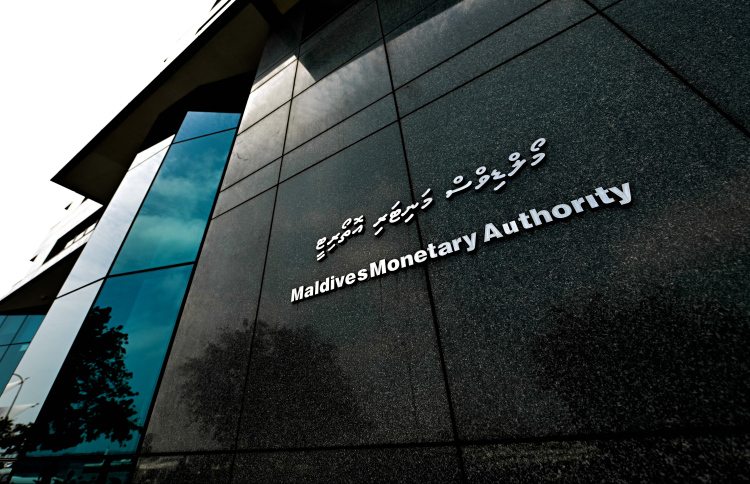
Maldives Monetary Authority (MMA) - Photo: Maldif Online
MALE : The central bank of Bangladesh has submitted three proposals to the Maldives Monetary Authority (MMA), including a currency swap arrangement, to simplify money transfers for Bangladeshi workers living in the Maldives.
Bangladesh Bank statistics indicate that remittances sent from the Maldives dropped from $141 million in the 2024-2025 fiscal year to $118 million in the 2025-2026 fiscal year, representing a 16.4 percent year-on-year decline. During the first three months of this year, $38 million was remitted to Bangladesh.
In a letter sent last Thursday by Bangladesh Bank Governor Md. Mostaqur Rahman to the MMA governor, it was highlighted that Bangladeshi workers face major hurdles sending money home.
Because international financial channels do not accept Maldivian Rufiyaa, expatriates are often forced to buy US dollars on the black market at high rates before paying steep commission fees on official remittance channels.
The proposed measures aim to streamline transactions through bilateral discussions between the two central banks while adhering to domestic laws and regulations.
Asian Clearing Union (ACU) Mechanism: Enable the use of Maldivian Rufiyaa for remittances, with recipients collecting funds in Bangladeshi Taka.
Taka Cards for Travel: Introduce Taka cards issued by Bangladeshi banks to help visiting workers settle travel-related expenses in local currency.
Currency Swap Arrangement: Establish a currency swap framework to facilitate the repatriation of earnings by Bangladeshi nationals.
Bangladesh represents the largest source market for foreign labor in the Maldives, with an estimated 100,000 Bangladeshi nationals currently employed across key economic sectors including construction, tourism, and services.
Due to statutory national recruitment quotas and ongoing foreign exchange challenges in the local market, financial institutions and central banks in both countries have been actively exploring mechanisms to streamline financial transactions and safeguard official remittance channels.