.svg)


The Maldives Monetary Authority has begun publicly naming tourism properties that fail to exchange foreign currency under foreign exchange regulations, identifying Raha Resort and South Palm Resort Maldives as non-compliant.
 News Desk
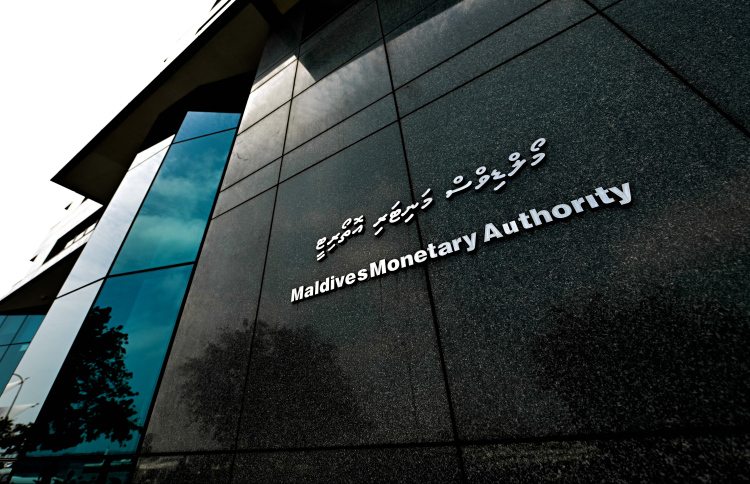
Maldives Monetary Authority (MMA) - Photo: Maldif Online
MALÉ: The Maldives Monetary Authority (MMA) has begun publishing the names of tourism properties that completely fail to exchange foreign currency as mandated by foreign exchange regulations.
In its newly released compliance report, the central bank identified Raha Resort in Laamu Atoll and South Palm Resort Maldives in Addu Atoll as two properties that have failed to surrender foreign currency in accordance with the law.
Raha Resort is operated by Heavy Load Maldives, where former MP Moosa Manik holds shares. South Palm Resort is owned by Ibrahim Saleem and tourism veteran Moosa Dheedi.
The central bank urged all non-compliant operators to align their practices with statutory requirements and confirmed that unregistered businesses will receive a final opportunity to register.
Overall compliance across different categories of the tourism industry varies according to the MMA report:
Category A Resorts: 78 percent of resorts fully comply with foreign currency exchange rules, 20 percent show partial compliance due to requested concessions, and 2 percent completely default.
Category B (Guesthouses, Safari Vessels & Hotels): 48 percent maintain full compliance, 15 percent show partial compliance, and 37 percent have not exchanged foreign currency. MMA is providing awareness support for these small and medium businesses.
Category C (High-Revenue Businesses over USD 15 Million): 38 percent fully comply, 33 percent partially comply, and 29 percent have failed to exchange dollars. MMA has proposed legal amendments to address concession requests in this category.
Under foreign exchange regulations, 90 percent of exchanged dollars are retained by the MMA, with 30 percent redistributed back to local commercial banks. These redistributed funds are prioritized for essential imports, public needs, and supporting small and medium-sized enterprises.