.svg)


COP31 in Turkey closed without an overarching political deal after countries failed to agree on fossil fuel commitments and climate finance, exposing deep divisions over global climate action.
 Mariyam Adheela
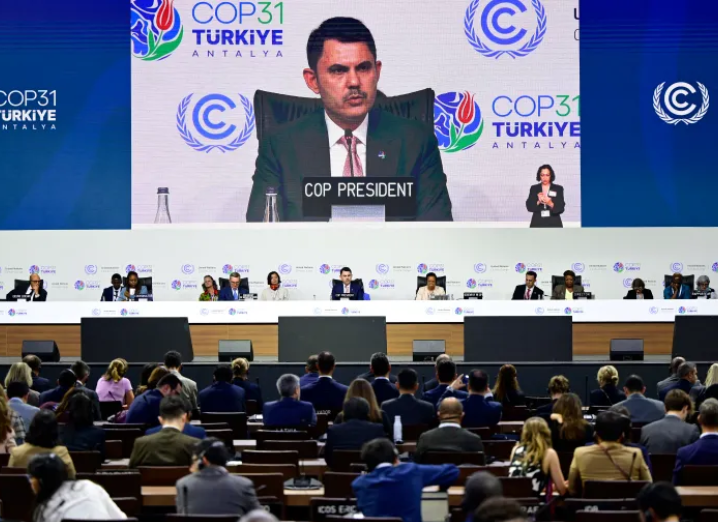
COP31's President and Turkiye’s Environment Minister Murat Kurum speaks during a plenary session as part of the United Nations Climate Change Conference (COP31) in Antalya, Turkiye -- photo: Yasin Akgul/AFP
ANTALYA, Turkey: The United Nations COP31 climate summit ended on Sunday, November 22, without an overarching political agreement after nearly 200 countries failed to reach consensus on key measures to tackle climate change.
The two week conference in Antalya continued for almost two days beyond its scheduled closing date, becoming the longest United Nations climate summit on record.
Negotiations broke down mainly over disagreements on whether the final agreement should include a clear commitment to move away from coal, oil and natural gas, as well as disputes over financial support for developing countries.
The final draft of the proposed agreement did not explicitly mention fossil fuels, despite their role as the main driver of global warming.
The omission drew strong objections from the European Union, the United Kingdom and several climate vulnerable countries, including Panama and the Marshall Islands. They argued that the proposed text failed to reflect the urgency of reducing dependence on fossil fuels.
Oil producing countries, including Saudi Arabia, opposed stronger language on phasing out fossil fuels, with disagreements preventing negotiators from reaching a compromise.
The proposed agreement also failed to secure consensus on climate finance, particularly the support needed by developing countries to adapt to rising temperatures and the growing impacts of extreme weather.
United Nations Secretary General António Guterres expressed deep disappointment over the failure to reach an agreement, saying the outcome reflected a serious setback in international climate cooperation.
He stressed that the lack of political consensus did not change the scientific evidence on climate change, warning that global temperatures and greenhouse gas emissions remain dangerously high.
COP31 President Murat Kurum acknowledged that countries had been unable to agree on the proposed text, confirming that the decisions would not be adopted without consensus.
Although the summit failed to secure its main political agreement, some separate decisions on issues including climate adaptation and a just transition were reached.
The outcome leaves major questions over the implementation of global climate commitments unresolved ahead of COP32, scheduled to take place in Addis Ababa, Ethiopia, in November 2027.